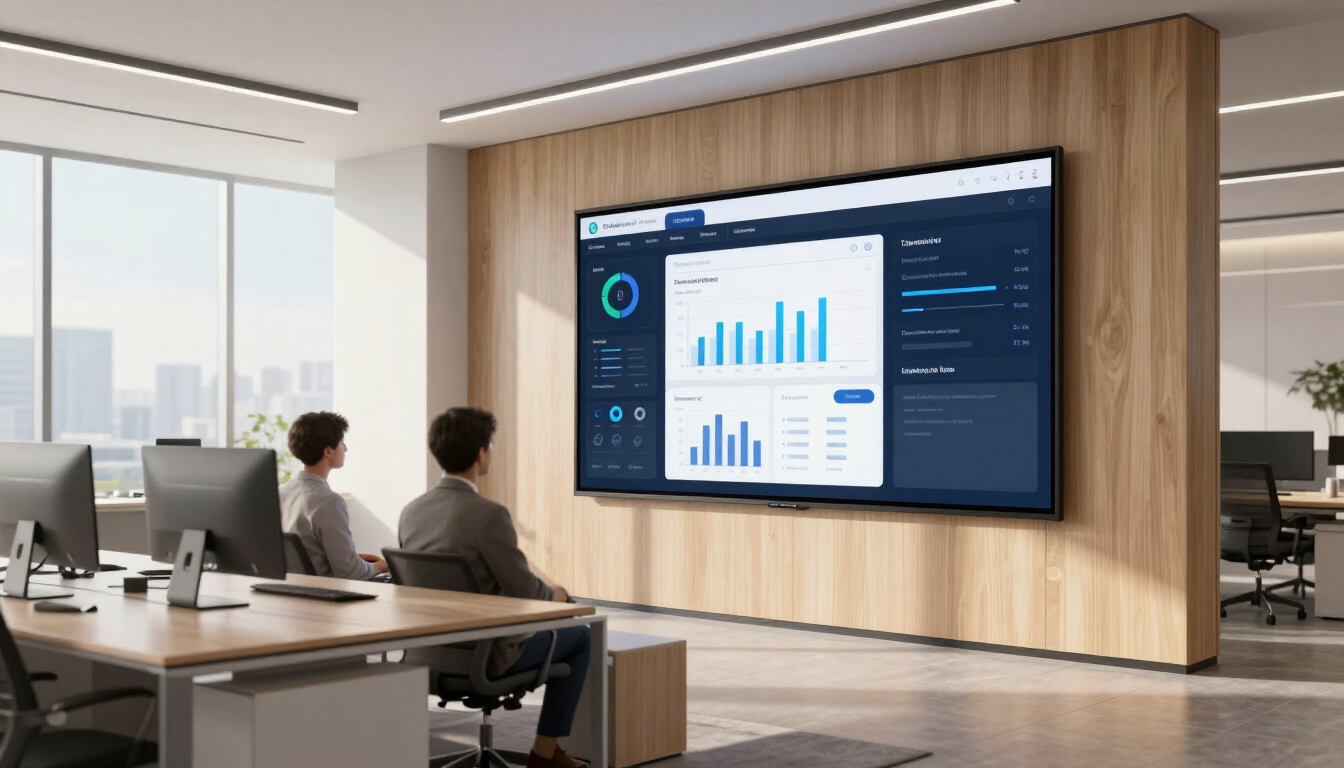

5 Ways System Integration Saves Business Time & Money
Disconnected systems cost businesses significant time and capital through manual data entry, human error, and fragmented workflows. System integration solves these issues by creating a unified Home for data, allowing disparate applications to communicate seamlessly. This streamlines operations, eliminates technical silos, and provides high-accuracy, real-time business intelligence.
What is the real cost of disconnected systems?
In many modern organisations, especially within the competitive landscape of South Africa, the reliance on multiple, isolated software platforms has become a silent productivity killer. When systems do not "talk" to one another, your employees are forced to act as the bridge between them. This phenomenon, often referred to as "human middleware," involves staff manually copying data from one CRM to an accounting tool or updating inventory levels across three different spreadsheets. The cost here is two-fold: the actual salary paid for hours spent on low-value tasks and the massive opportunity cost of those employees not focusing on high-level strategic growth and innovation.
Furthermore, disconnected systems lead to significant data fragmentation. When information is scattered across different departments, leadership loses the ability to see a "single source of truth." This lack of visibility results in delayed decisions or, worse, decisions based on conflicting data. If your sales team is looking at one set of numbers while your finance team is looking at another, the friction created can stall projects for weeks. The financial impact extends to customer satisfaction as well; if a client receives conflicting information because your support software isn't synced with your billing platform, trust is eroded instantly. In the digital age, speed and accuracy are the primary currencies of success. Forcing your business to operate with fragmented tools is essentially like trying to run a marathon with your shoelaces tied together—you might move forward, but you will never reach your full potential or scale effectively.
Beyond the immediate operational drag, there is the issue of "Shadow IT." When official systems are difficult to use or don't communicate, employees often turn to unauthorized third-party apps to get their work done. This creates a nightmare for security and compliance, as sensitive corporate data is stored in unmanaged personal accounts. The long-term financial risk of a data breach originating from these silos can be far higher than the initial cost of professional integration. Addressing these gaps isn't just a technical upgrade; it's a fundamental requirement for risk mitigation and corporate governance in a data-driven world.
The high price of manual data synchronization
Manual data entry is not just a time-sink; it is a gateway for catastrophic operational errors that drain resources. Studies consistently show that manual data handling has a significant error rate, which can lead to miscalculated invoices, incorrect shipping addresses, or duplicated customer profiles. When these errors occur, the "cost" is not just the time taken to fix the mistake but the downstream impact on the entire supply chain. Correcting a single entry error in an ERP system can take up to ten times longer than entering it correctly the first time, creating a massive backlog that hinders business agility and frustrates stakeholders at every level of the organisation.
Beyond the immediate financial loss, there is a profound psychological toll on your workforce. High-performing professionals do not want to spend their afternoons performing repetitive copy-paste tasks. When a business fails to provide an integrated bespoke Ecosystem , it risks losing its best talent to competitors who offer more modern, automated environments. Employee turnover is perhaps the most expensive hidden cost of disconnected systems. The expense of recruiting, onboarding, and training a new staff member far outweighs the investment required to integrate existing software. By automating the mundane, you empower your team to engage in creative problem-solving and innovation, which are the true drivers of long-term profitability and market leadership.
https://irp.cdn-website.com/9e315f33/dms3rep/multi/1787586561737-1_1-izB.png
How does system integration improve operational efficiency?
The transition from fragmented tools to a unified architecture is the cornerstone of digital transformation. Integration allows for the automation of complex workflows that previously required human intervention. For instance, when a sale is closed in your CRM, an integrated system can automatically generate an invoice in your accounting software, update the inventory in your warehouse management system, and trigger a welcome email from your marketing platform. This "hands-off" approach ensures that operations move at the speed of light, regardless of the time of day or the location of your staff, which is critical for businesses operating in global markets.
Centralized data also leads to superior analytics and business intelligence. With an integrated Home for your information, you can deploy AI-driven tools to identify trends that were previously hidden by data silos. You can see precisely how marketing spend correlates with warehouse turnover or how customer support response times affect long-term retention. This level of insight is only possible when data flows freely between systems without manual interference. In South Africa's evolving market, the ability to pivot based on real-time data is a competitive necessity. Integration doesn't just save time; it provides the clarity required to scale your business without a linear increase in overhead costs. By removing technical friction, you create a scalable foundation where your output can grow exponentially while your administrative effort remains lean and manageable.
Consider the impact on your customer service department. When a customer calls with a query, an integrated system allows the agent to see the customer’s entire history—purchases, support tickets, and communication preferences—in one window. There is no need to keep the customer on hold while switching between platforms. This efficiency directly translates into higher Net Promoter Scores and customer loyalty. The ability to resolve issues on the first contact is a major cost saver, reducing the volume of follow-up interactions and freeing up your support team to handle more complex inquiries. Efficiency, in this context, is both a cost-cutting measure and a revenue-generating strategy.
Understanding the ROI of bespoke digital ecosystems
While off-the-shelf software often promises quick fixes, it frequently leads to more silos because these platforms are built for the masses, not for your specific business logic. A bespoke approach to integration ensures that every connection is purpose-built to support your unique operations. The Return on Investment (ROI) of custom engineering is realized through the longevity and flexibility of the system. Unlike rigid platforms that force you to adapt your processes, a bespoke system grows with you, allowing you to add new modules or integrate third-party APIs as your needs evolve over time.
When evaluating the cost of integration, one must look at the total cost of ownership over a five-year period. Manual processes and "workarounds" for disconnected software incur a mounting monthly cost in the form of wasted hours and errors. In contrast, a one-time investment in professional system integration pays for itself rapidly by reclaiming those lost hours and preventing costly mistakes. Furthermore, bespoke systems reduce the need for multiple expensive subscriptions to "connector" apps that often have limited functionality and high monthly fees. By building a direct, high-performance bridge between your core systems, you secure your data integrity and future-proof your organisation against the rapid changes of the digital landscape.
Bespoke ecosystems also offer a unique advantage in terms of intellectual property. When you build a system that perfectly mirrors your proprietary business processes, that technology becomes an asset that adds value to your company. It is not just a tool; it is a competitive advantage that cannot be easily replicated by competitors using generic software. This strategic value, combined with the operational savings, makes bespoke integration one of the highest-yielding investments a business can make in its digital infrastructure.
https://irp.cdn-website.com/9e315f33/dms3rep/multi/1787586561738-1_1-kjs.png
Why should businesses move away from legacy software silos?
Legacy systems that lack integration capabilities are often the weakest link in a company’s security posture. Disconnected software usually requires disparate login credentials and manual file transfers, both of which increase the risk of data breaches and unauthorized access. Modern integration utilizes secure APIs and centralized authentication protocols, ensuring that sensitive business information is protected while moving between applications. Moving away from these silos is not just about efficiency; it is about risk management in an era where data privacy is paramount and regulatory requirements are becoming increasingly stringent.
Additionally, disconnected systems are difficult to maintain and upgrade. Every time one software provider updates their platform, the manual workarounds your team created may break, leading to unexpected downtime and emergency repair costs. A professionally integrated system is designed to handle updates gracefully, ensuring continuous uptime and reliability. If you are ready to stop fighting your software and start leveraging it as a strategic asset, the first step is to Contact an engineering partner who understands the nuance of bespoke architecture. Transitioning to an integrated environment is the most effective way to reclaim your time and redirect your financial resources toward growth.
Furthermore, the inability to integrate inhibits your ability to adopt emerging technologies like Artificial Intelligence and Machine Learning. AI requires high-quality, consolidated data to provide meaningful insights. If your data is trapped in disconnected silos, your AI initiatives will fail to produce results. By integrating your systems now, you are laying the groundwork for the next wave of technological innovation. You are essentially preparing your business to be "AI-ready," ensuring that you can leverage new tools as soon as they become available, rather than playing catch-up with more agile competitors.
Essential components of a unified business system
To achieve true integration, a business must look beyond mere data syncing. A unified system requires a robust architecture that prioritizes security, speed, and user experience. This involves the use of high-quality APIs (Application Programming Interfaces) that allow for real-time communication between platforms. It also requires a middleware layer or a centralized database that can reconcile conflicting data points and ensure that all applications are drawing from the same information pool. Without these foundational elements, integration efforts are often superficial and fail to deliver the expected long-term benefits.
Another critical component is the user interface. An integrated system should provide a seamless experience for the employee, where they can access all necessary functions from a single dashboard. This reduces the cognitive load on staff and decreases the training time required for new hires. When technology is intuitive and interconnected, adoption rates increase, and the business sees a faster return on its investment. Finally, ongoing support and monitoring are essential. As business needs change, the integrated ecosystem must be tuned and optimized to ensure it continues to provide maximum value.
Key Takeaways for Business Leaders
- Eliminate Manual Labor: Integration removes the need for repetitive data entry, saving hundreds of hours annually and reducing burnout.
- Enhance Data Accuracy: Automated synchronization prevents human errors that lead to costly financial discrepancies and customer dissatisfaction.
- Improve Visibility: A unified system provides a single source of truth for faster, more accurate decision-making across all levels.
- Boost Employee Morale: Removing mundane tasks allows your team to focus on high-impact, meaningful work that drives innovation.
- Scalability: Integrated systems allow your business to grow without a corresponding increase in administrative costs or technical debt.
To begin your journey toward a more efficient, integrated future, explore our Ecosystem solutions or reach out to our team today to discuss how we can build technology around your business, not the other way around. Investing in integration is the fastest way to turn your digital infrastructure from a cost center into a powerful engine for growth and profitability.